



Lightweight Steel Buildings
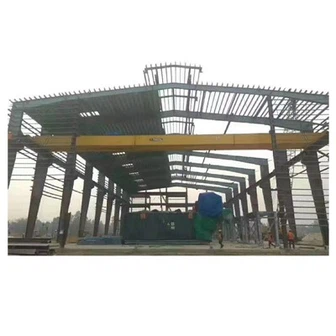
Lightweight Steel Building System / Cold-Gauge Steel Prefabricated Structure / Light Steel Modular Building
Product Introduction
Reduced structural mass
slim, cold-formed steel profiles reduce foundation loads & material cost.
Fast, modular assembly
factory-prefabricated components; bolt-together assemblies; quicker site erection.
Energy & cost efficiency
less material waste; improved insulation; reduced labor and transport cost.
High strength in lightweight form
steel grades & design enabling good load-bearing despite lighter components.
Flexibility & adaptability
modular spans, multi-story possibilities, mixed usage.
Sustainability & durability
steel is recyclable; resistance to weather, pests, fire.
Use Cases
-
Small to medium warehouses, storage & logistic buildings
-
Commercial buildings: shops, offices, exhibition halls
-
Residential / multi-family housing where lightweight framing preferred
-
Agricultural buildings: poultry houses, farm sheds, cold storage etc.
-
Low-rise institutional buildings: community centers, schools in remote or cost-sensitive zones

Technical Specifications & Design Parameters
| Parameter | Typical / Offered Range or Example | Why It Matters to Buyer |
|---|---|---|
| Steel Material / Grade | Cold-formed steel: grades equivalent to Q235 / Q355 (or S235 / S355), or local standard. Steel thickness typically in the range of 0.8 mm to ~3 mm for cold-formed members in lightweight systems. | Affects strength, durability, weight, cost, ease of transport. |
| Span / Clear Width | Single-span or multi-span layouts; clear spans up to 30-36 m using lightweight profiles in some designs. Smaller spans (~6-15 m) typical for many lightweight structures. | Larger span reduces number of internal supports, giving more open interior space, but requires stronger members or more bracing. |
| Height (Eave / Ridge) | Eave heights typically between 3 m to 10-12 m depending on usage (warehouse height, mezzanine, etc.). Roof pitch/slopes variable depending on climate & drainage. | Determines clearance, internal usability, drainage, cost of roofing/cladding. |
| Roof & Wall Cladding & Insulation | Options include single steel sheet panels, insulated sandwich panels with PU / EPS / Rock-Wool / Glass-Wool cores; panel thickness from ~50 mm to 150 mm (or more) for heavy insulation zones. Panel coating options (pre-painted, PVDF, HDP, SMP) or hot-dip galvanizing. | Affects thermal comfort, energy use, weather resistance, sound insulation, appearance. |
| Secondary Framing | C-section or Z-section purlins/girts; sizes from e.g. C80~C300 / Z100~Z300 in many prefabs. Bracing (X, V or knee braces) to ensure lateral stability. | Provides rigidity, resists wind/snow loads, ensures panel support, reduces deflection. |
| Load Capacities | Design for snow loads, wind loads, seismic loads per local code; live loads (maintenance, storage) plus dead loads (structure, panels). Examples: span loads of 350-500 kg/m² possible in some designs. | Must meet safety & regulatory standards; influences member sizing and cost; critical to determine required strength. |
| Connection & Assembly | High strength bolts, self-tapping screws, welded joints in some parts; design for ease of connection & minimal welding on site. Prefab, shop drilling. | Affects erection speed, quality control, field reliability. |
| Foundation & Anchoring | Pad or strip concrete footings; anchor bolts; base plates; likely lighter foundation requirements due to lower structural weight. Soil bearing capacity matters. | Reduces foundation cost; essential for ensuring structure stability and integrity, especially under dynamic loads. |
| Corrosion Protection & Finishing | Hot-dip galvanizing; pre-painted steel; coatings suitable for UV, moisture; thicker coatings or special paints for coastal or humid regions. | Ensures longevity, reduces maintenance, prevents corrosion in tough climates. |
| Fire & Safety Features | Non-combustible materials; possibility of fire rating for walls/roof; emergency escapes; ventilation; compliance with local safety/fire code. | Critical for regulatory approval and occupant safety. |

Manufacturing, Quality Assurance & Testing
- Factory prefabrication under controlled conditions: roll forming, cutting, punching.
- Mill test certificates for steel materials.
- Coating / paint quality assurance: thickness, adhesion, salt spray / corrosion testing.
- Structural module fitting tests (e.g., check bolt holes, alignment).
- Performance tests: thermal insulation, sound insulation; under load deflection tests; wind & snow load calculations.
Documentation & Compliance
01
Structural & Architectural Drawings; Foundation Plan
02
Engineering Calculations And Load Reports (wind, Snow, Live Loads)
03
Material Certifications (steel, Coatings, Panels)
04
Local Code Compliance (building, Fire, Wind / Seismic)
05
Option For Stamped Drawings By Licensed Engineers
06
As-built Drawings If Modifications Done On Site
Delivery, Lead Time, & Installation
01
WE CAN DO
Prefab components delivered labeled & packaged; minimal waste; easily transported.
02
WE CAN DO
Standard models (pre-defined span/height) might be delivered in 3-6 weeks; custom sizes / heavy insulation / special finishes may take 6-10 weeks or more.
03
WE CAN DO
On-site assembly: sources of support: erection manual; optional field supervision; schedule planning.

Hot Tags: lightweight steel buildings, China lightweight steel buildings manufacturers, suppliers, factory, light frame steel houses, light gauge steel frame structure, light steel frame homes, light steel prefab house, modern steel frame house, multi floor light truss frame prefab villa house
You Might Also Like



Send Inquiry
