


The Future Of Modular Assembly: The Rise Of Flatpack Container Houses
Across the globe, the demand for housing is increasing, especially in the context of accelerated urbanization and increasingly prominent environmental issues, people have a strong demand for sustainable, flexible and economical housing solutions. As an innovative form of construction, flatpack container houses have gradually become an ideal choice to meet these needs. This kind of house transformed from standard containers not only has the advantages of fast construction, resource conservation and flexible design, but also because of its mobility and modularity, it is popular in many fields such as post-disaster reconstruction, temporary housing and holiday villas.
What is a flatpack container house?
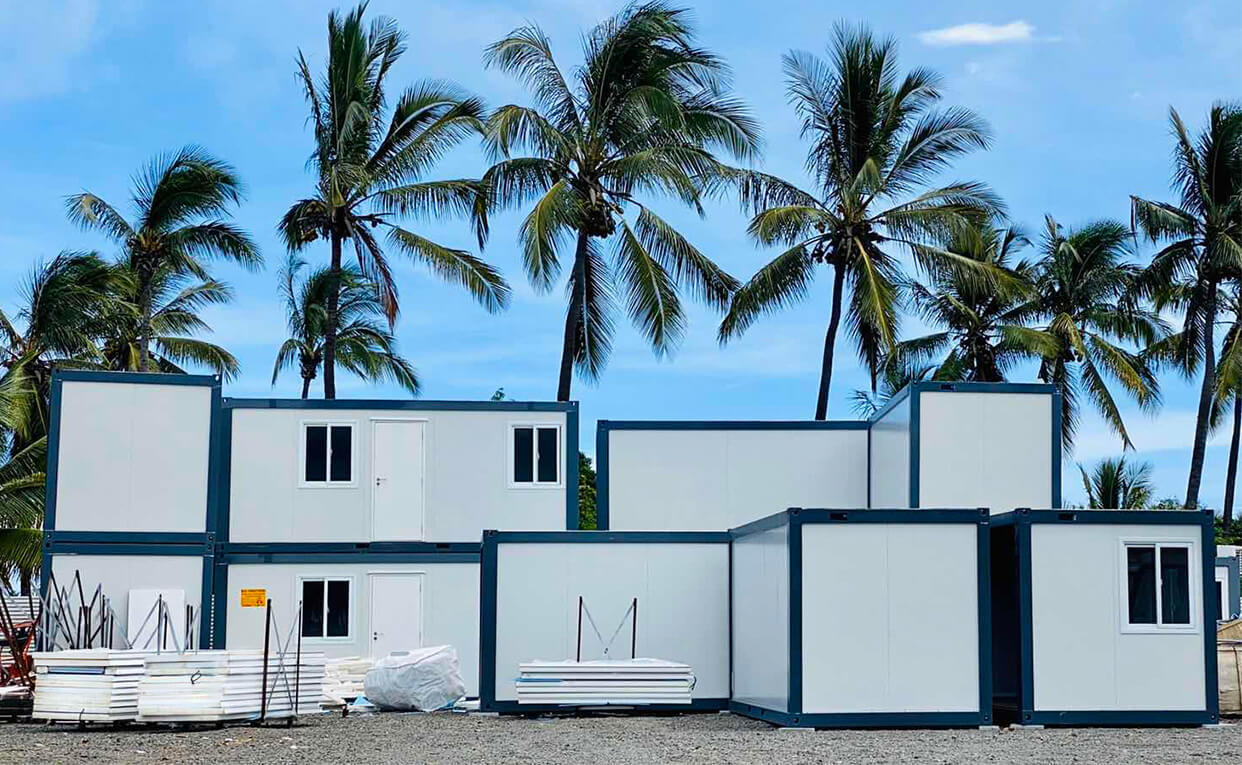
A flatpack container house is a modular building form based on standardized container design. Unlike traditional buildings, flatpack container houses are pre-processed structural units in the factory. They adopt modular design and can be transported in a "flat" form and can be quickly assembled after arriving on site. Compared with those houses built from scratch, this "ready-to-use" feature makes flatpack container houses an ideal choice for many temporary and long-term construction projects.
The main structure of the container house is based on standard shipping containers, which are extremely weather-resistant and durable and can withstand harsh climatic conditions. By flat-packing these container units, manufacturers can greatly reduce transportation costs while also improving the convenience and efficiency of transportation. The assembly process is usually completed by a professional team, and most of the house components have been pre-processed in the factory, so they can be quickly installed on site with simple operations.
Advantages of Flat-Panel Container Houses


Flat-panel container houses not only have advantages in terms of economy, flexibility and environmental protection, but also have many unique properties that are significantly different from traditional buildings.
1. Quick installation and efficient transportation
The design of flat-panel container houses makes them extremely advantageous in transportation and assembly. Due to the use of flat-panel transportation, these houses can be transported across regions or across countries by trucks, trains or even ships, greatly saving transportation costs and time. Once at the destination, the modular design makes the assembly process simple and fast, usually completed within a few days or weeks. This is particularly important for housing problems that need to be solved quickly, especially in post-disaster reconstruction or emergency housing needs.
2. Environmental protection and sustainable development
The environmental protection characteristics of flat-panel container houses make them a model of sustainable construction. First of all, the container itself is mostly made of steel and can be recycled many times. By converting scrapped shipping containers into houses, the problem of the accumulation of waste containers is reduced, and to a certain extent, the demand for new building materials is reduced. In addition, the compact structure of container houses usually requires a small foundation, which reduces the occupation and damage of land and further improves its environmental friendliness.
3. Flexibility and modular design
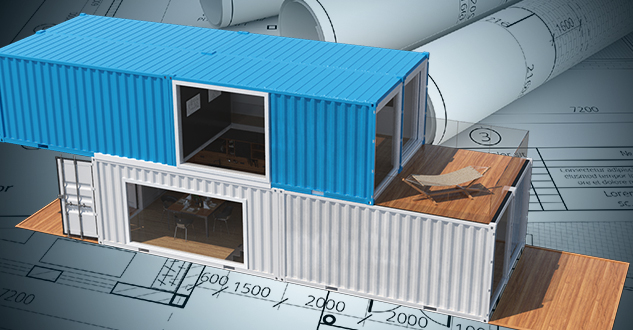
The modular design makes flat-pack container houses highly flexible. According to actual needs, multiple container units can be stacked vertically or horizontally to form a variety of different spatial layouts. This flexibility can not only meet the needs of personal residences, office spaces or holiday villas, but also for education, medical and commercial purposes. Users can customize according to their needs, from small single-family homes to large collective dormitories, and the modular structure can meet a variety of needs.
4. Durability and safety
The structure of flat-pack container houses is based on shipping containers, which naturally have excellent weather resistance and sturdiness. Container materials are generally able to withstand extreme climatic conditions, including strong winds, heavy rains and earthquakes. This makes container houses perform far better than traditional buildings in harsh environments, especially in areas prone to natural disasters, where the structural strength of flat-pack container houses provides additional security.
5. Economy and Affordability
Compared to traditional buildings, flat-pack container houses are usually cheaper. This is mainly due to the efficiency improvement brought by modular prefabrication and the recycling of materials. In addition, the fast construction time also means reduced labor costs. In areas where housing costs are high, flat-pack container houses provide an economical and viable option for low-income families.
Diversity of Application Fields
Flat-pack container houses have a wide range of applications, from temporary housing to high-end vacation villas.
1. Emergency Housing and Post-Disaster Reconstruction
In areas where natural disasters are frequent, flat-pack container houses are widely used in post-disaster reconstruction projects due to their rapid deployment and ruggedness. This type of house can quickly provide safe temporary shelter to help the affected people settle as soon as possible. In addition, flat-pack container houses also provide a viable long-term solution in refugee camps and other emergency situations.
2. Vacation Villas and Ecotourism
In remote areas or nature reserves, flat-pack container houses are widely used in vacation villas and ecotourism projects due to their miniaturization, mobility and environmental protection. Many designers use the modular characteristics of containers to integrate them with the natural landscape to create comfortable and environmentally friendly living spaces.
3. Commercial Use
Flat-pack container houses are also gradually being used in the commercial sector, such as for creating fast food restaurants, retail stores, cafes and even exhibition halls. The modern industrial design of containers can attract consumers, and their quick assembly and disassembly features make them an ideal choice for commercial spaces.
4. Education and Medical Facilities
In some remote areas or developing countries, flat-pack container houses are transformed into infrastructure such as schools and medical stations. Due to the modular design of container houses, space can be quickly increased or decreased, thus flexibly responding to population mobility and changes in demand.
Continuous Innovation and Future Development
With the continuous advancement of construction technology and materials, the design and application of flat-pack container houses are also constantly innovating. In the future, new technologies such as smart home systems, green energy technologies and 3D printing are expected to further enhance the sustainability and user experience of flat-pack container houses. Solar panels, rainwater collection systems and efficient thermal insulation materials have been widely used in many flat-pack container house projects, providing inspiration for future architectural development.
As a modern form of construction, flat-pack container houses not only demonstrate innovative solutions to environmental challenges in the construction industry, but also bring new options to the housing market. From its environmentally friendly characteristics to the advantages of rapid deployment, flat-pack container houses will continue to play an important role in various fields. In the foreseeable future, this flexible and sustainable construction model will become an important force in the urbanization process, meeting the housing and construction needs around the world.


