
What Steel Buildings Work Best in High-temperature Regions
In many parts of Africa, the Middle East, and Southeast Asia, high temperatures are not occasional-they are constant.
Daytime temperatures above 35°C (95°F), strong solar radiation, and hot air accumulation inside buildings can quickly turn a warehouse or factory into an unusable space.
For many project owners, the issue is not just construction-it's this:
"How do I build a steel building that stays usable in extreme heat-without relying on expensive cooling systems?"
This is where choosing the right type of steel building becomes critical.
The Real Problem: Heat Builds Up Faster Than You Expect
In high-temperature regions, steel buildings face a common issue:
Metal surfaces absorb heat quickly
Roof temperature can exceed 60–70°C
Indoor air becomes trapped without proper ventilation
Cooling systems consume too much electricity
In several warehouse projects in hot regions, the biggest complaint after completion was not structure quality-but:
→ "The building is too hot to work in during the day."
So the goal is not just to "build a steel warehouse"
👉 but to build one that controls heat effectively from the start
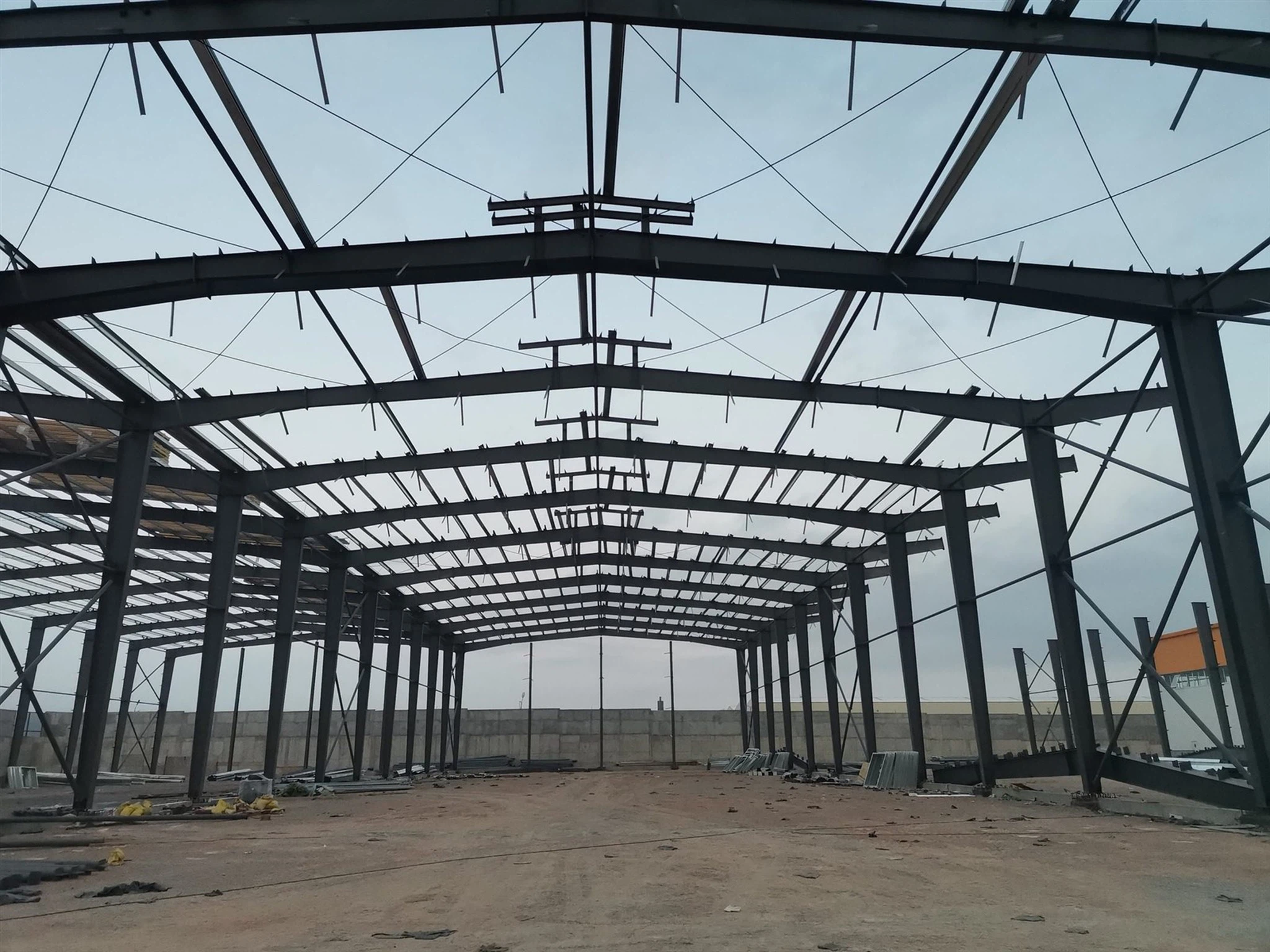
1. Steel Buildings with Ventilated Roof Systems
One of the most effective solutions in hot climates is ventilation-first design.
Instead of trying to cool the building artificially, allow heat to escape naturally.
Key features include:
Ridge ventilation (hot air exits from the top)
Roof vents or turbine ventilators
Airflow pathways from sidewalls to roof
Hot air rises-if you don't give it a way out, it stays trapped inside.
In practical terms, buildings with proper roof ventilation can feel significantly cooler without using additional energy.
2. Double-Layer or Insulated Roof Structures
The roof is the biggest source of heat gain.
A single-layer steel roof absorbs and transfers heat directly into the building.
Better-performing systems include:
Double-layer roofing (air gap reduces heat transfer)
Insulated sandwich panels
Reflective insulation materials
In one high-temperature warehouse project, adding roof insulation reduced indoor temperature noticeably during peak hours-without adding any mechanical cooling system.
👉 This is one of the most cost-effective upgrades you can make.
3. Light-Colored or Reflective Roofing Materials
Color matters more than most people expect.
Dark roofs absorb heat. Light-colored or reflective roofs reduce it.
Recommended options:
White or light grey roof panels
Reflective coatings
Heat-reflective steel sheets
This simple adjustment can reduce heat absorption significantly-especially in regions with strong sunlight.
4. Steel Buildings with Higher Roof Clearance
Hot air accumulates at the top of the building.
If the roof is too low, heat builds up faster and affects the working area.
A better approach is:
Increase eave height
Allow more vertical space for heat to rise
Combine with ventilation systems
This creates a buffer zone where hot air stays above the working level.
5. Open-Side or Semi-Open Steel Structures
In extremely hot regions where full enclosure is not required, semi-open steel buildings can perform better than fully enclosed ones.
Examples include:
Open-sided warehouses
Canopy-style steel structures
Partial wall designs
These allow continuous airflow, preventing heat buildup entirely.
This approach is widely used in:
Agricultural storage
Equipment shelters
Logistics staging areas
6. Orientation and Site Planning Matter
Even the best steel building design can underperform if placed incorrectly.
Important considerations:
Avoid direct sun exposure on the largest wall surfaces
Align the building with prevailing wind direction
Use surrounding space to enhance airflow
These decisions cost nothing-but can significantly improve thermal performance.
7. Reduce Dependence on Air Conditioning
In many high-temperature regions, electricity is either expensive or unstable.
If your building depends entirely on air conditioning:
Operating costs increase
Power issues affect usability
Maintenance becomes more complex
A better strategy is:
👉 Combine passive cooling (ventilation, insulation) with minimal mechanical support
This creates a more stable and cost-effective building in the long term.
8. Choose a Structure Designed for Hot Climates
Not all steel buildings are designed with heat in mind.
Some are copied from temperate-region designs, which leads to poor performance in hot environments.
From experience in projects across hot regions, the most successful buildings share these characteristics:
Ventilation is considered from the beginning
Roofing systems are designed to reduce heat gain
Installation is simple and adaptable to local conditions
Because in high-temperature regions, comfort is not a luxury-it directly affects productivity and usability.
Not Sure Which Steel Building Fits Your Climate?
If your project is located in a high-temperature region and you are concerned about:
Indoor heat buildup
High cooling costs
Poor working conditions
You don't need to overcomplicate the solution.
👉 A properly designed steel building can solve most of these issues before construction even begins.
Start With a Practical Recommendation
You can start by sharing:
Your project location (country)
Building size (if available)
Intended use (warehouse, factory, storage, etc.)
Based on this, you can get:
A suitable structure recommendation
Suggested ventilation and insulation approach
Practical ways to reduce heat without increasing cost
Final Thought
In high-temperature regions, the best steel building is not the strongest or the most complex-it's the one that stays usable during the hottest part of the day.
If heat is not addressed at the design stage, it becomes a permanent problem.
👉 But if handled correctly from the beginning, you can create a building that remains efficient, comfortable, and cost-effective for years to come.