


Wind And Earthquake Resistance Assessment Of LUTUO Steel Structure Buildings
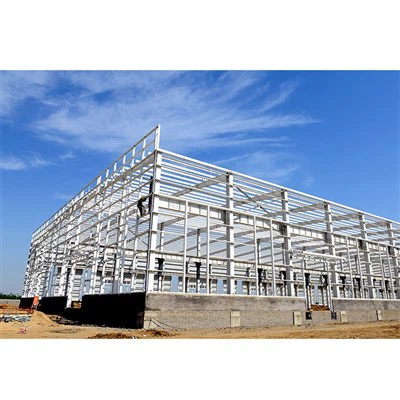
The article includes a detailed table comparing wind and seismic resilience features, and naturally incorporates B2B SEO keywords such as steel structure buildings, prefabricated steel building, custom steel structure solutions, seismic resistant steel structures, wind load design, base isolation, cross bracing, industrial warehouse building.
Steel structure buildings offer exceptional resilience against wind and seismic hazards. For B2B clients-developers, contractors, industrial project managers-understanding wind resistance, earthquake resistance, and how LUTUO designs its structures for extreme events is essential for safety, compliance, and long-term investment value.
Why Steel is Ideal for Wind & Earthquake Zones
High strength-to-weight ratio enables large clear spans and flexible frames while resisting wind uplift and lateral loads
Ductility and energy dissipation allow steel structures to bend rather than break during seismic events
Excellent connection detailing (bolted/welded joints, cross bracing) ensures load paths and performance under lateral forces
Key Design Features of LUTUO Steel Structure Buildings
LUTUO's platform integrates industry-standard principles for both wind and seismic resistance:
Wind Load Design
Uses standards like ASCE 7, EN 1991‑1‑4, or local wind codes to determine design wind speeds and exposure conditions
Incorporates wind bracing, cross bracing, purlins, girts, and reinforced anchors to resist uplift and lateral wind loads
Optional wind tunnel testing for critical large-span or high-rise projects, validating performance against simulated high wind conditions
Seismic Load Design
Performs site-specific seismic hazard assessments, including PGA and response spectrum, to determine Seismic Design Category (SDC)
Applies seismic design methods like Equivalent Lateral Force (ELF), Modal Response Spectrum Analysis, or Time-History Analysis based on ASCE 7 or Eurocode 8
Employs moment-resisting frames, shear walls, or base isolation systems depending on performance objectives
Comparative Table: Wind vs. Earthquake Resistance Features
| Feature / Design Element | Wind Resistance Function | Earthquake Resistance Function | LUTUO Implementation |
|---|---|---|---|
| Structural Material: Steel | Flexibly resists high lateral loads; resists uplift | High ductility; absorbs seismic energy without brittle failure | Uses certified high-yield structural steel |
| Bracing System | Cross bracing, K‑bracing, reinforced portal frames | Cross bracing, moment frames, shear walls for drift control | Custom-designed according to project wind/seismic category |
| Connections (bolts & welds) | Anchors and joints designed to transfer wind forces | Joints detailed for ductility and seismic load transfer | High-strength bolts, weld inspections, fault-tolerant nodes |
| Base & Foundation Anchoring | Heavy anchor bolts, uplift-resistant base plates | Base isolators or reinforced foundations to reduce acceleration | Engineered base design per site seismic level |
| Load Path Continuity | Continuous structural load path for wind shear | Continuous load path resisting seismic forces | Standardized for all steel structure building systems |
| Serviceability / Drift Limits | Inter-story drift limit ≈ H/400 to H/600 | Seismic drift limit up to 2.5% of story height | Engineered to comply with ASCE/Eurocode thresholds |
| Dampers & Isolation | (Optional) aerodynamic features or dampers as needed | Tuned mass dampers or base isolation for high-risk zones | Available on request for critical industrial warehouse designs |
Drift and Load Performance Guidelines
For wind serviceability, permissible inter-story drift is commonly around H/400 to H/500-protecting cladding and occupant comfort
For seismic drift, limits are typically about 2.5% of story height for structures with fundamental periods under 0.7 s
Combined wind and seismic design ensures conservative performance under both loads-studies show seismic losses can increase notably if wind loads are omitted in seismic evaluation
Advanced Techniques & Third-Party Validation
Wind tunnel testing may be commissioned for large, complex LUTUO industrial buildings-simulating directional wind pressure distributions
Seismic testing & certification follows standards like ASCE 7, AISC 341, Eurocode 8 or GB 50011 in China, depending on jurisdiction
Regular quality control, inspections of welding and bolting, and alignment verification ensure compliance and performance
Real-world Benchmarks & Global Practices
Although LUTUO focuses on steel structure buildings with industrial and modular scope, best practices in seismic resilience can be illustrated with global benchmarks:
Tall skyscrapers, such as Taipei 101, utilize outrigger trusses, tuned mass dampers, and deep foundations to resist typhoons and seismic shaking
Japan's structures routinely meet high standards using energy-dissipating dampers and isolation systems, supported by strict building codes and inspections
Maintenance, Monitoring & Long-Term Performance
Periodic inspections are recommended: checking bolted joints, checking for fatigue or corrosion, verifying cross-bracing integrity
IoT-enabled sensors may be integrated for structural health monitoring-tracking drift, vibration, and detecting anomalies over time
Maintenance reinforcement (e.g., re-galvanizing, bolt torque re-checks) helps maintain seismic and wind resilience throughout the building lifecycle
Conclusion & LUTUO Value Proposition
LUTUO's steel structure buildings are engineered to meet wind and earthquake resilience requirements through:
Precise load modelling (wind and seismic), based on local codes (ASCE, Eurocode, GB)
Robust structural detailing: cross bracing, ductile connections, continuous load paths
Optional enhancements: base isolation, vibration dampers, and sensor-based monitoring
Quality-controlled fabrication and installation aligned with global standards
By building with LUTUO, B2B clients gain:
A cost-effective industrial warehouse building system that is seismically and aerodynamically resilient
A prefabricated steel building designed for real-world durability in high-wind, high-seismic zones
A future-ready custom steel structure solution bolstered by monitoring and maintenance assurance


