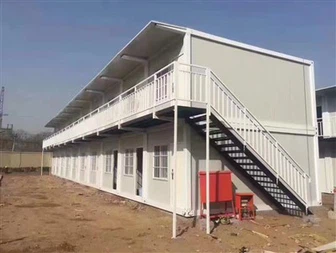

MEP Integration in Modular Steel Systems
Introduction: Why MEP Integration Defines Modular Performance
In modular steel systems, mechanical, electrical, and plumbing (MEP) integration is not a secondary coordination task-it is a defining factor that determines whether modular construction delivers on its promises of speed, quality, and predictability.
Unlike conventional site-built steel structures, where MEP systems are often installed after structural framing is complete, modular steel construction requires MEP elements to be designed, coordinated, and often installed within factory-fabricated modules. This shift fundamentally changes the relationship between structure and services, placing far greater emphasis on precision, early coordination, and system-level thinking.
This article explores the technical challenges, engineering principles, and best practices for integrating MEP systems into modular steel structures, with a focus on long-term performance and constructability.
Structural–MEP Interdependency in Modular Steel Systems
Fixed Geometry and Limited Tolerance
Modular steel systems are defined by fixed geometries. Once modules leave the factory, opportunities for adjustment are minimal. This constraint means that MEP routing must align precisely with structural members, openings, and connection zones.
Inadequate coordination can lead to:
Interference between ducts, pipes, and steel members
Compromised structural capacity due to excessive penetrations
On-site rework that undermines modular efficiency
MEP integration must therefore be resolved at the design stage rather than deferred to construction.
Load-Bearing Implications of MEP Components
Although MEP systems are typically classified as non-structural, their weight and dynamic behavior influence structural design.
Examples include:
Large HVAC units imposing concentrated loads
Vertical plumbing stacks adding cumulative weight across modules
Vibration from mechanical equipment affecting structural performance
In modular steel systems, these effects must be accounted for within the structural load path, especially when MEP components are installed at the factory.
Design Coordination Strategies
Early Multidisciplinary Integration
Successful MEP integration begins with early collaboration between structural engineers, MEP engineers, and modular system designers. Sequential design approaches are incompatible with modular construction.
Key coordination priorities include:
Shared reference grids and datum levels
Defined MEP zones within structural modules
Agreed penetration locations and sizes
Early decisions reduce downstream conflicts and preserve structural integrity.
Digital Modeling and Clash Detection
Advanced digital modeling plays a critical role in modular MEP integration. Three-dimensional coordination models allow teams to visualize spatial relationships and identify conflicts before fabrication begins.
However, digital tools are effective only when supported by disciplined engineering workflows. Models must reflect realistic tolerances, installation requirements, and maintenance clearances rather than idealized geometry.
Structural Penetrations and Openings
Impact of Penetrations on Structural Performance
Penetrations through steel beams, columns, or floor systems are often necessary to route MEP services. Each penetration alters stress distribution and reduces effective cross-sectional area.
In modular steel systems, uncontrolled penetrations can compromise:
Load-bearing capacity
Fire resistance
Fatigue performance
As a result, penetration locations must be engineered, not improvised.
Standardization of MEP Openings
One effective strategy is the standardization of MEP openings across modules. By defining repeatable penetration patterns, manufacturers can:
Simplify fabrication
Improve quality control
Reduce structural variability
Standardization also facilitates future modifications and maintenance.
Vertical MEP Distribution in Modular Systems
Alignment Across Stacked Modules
In multi-story modular steel buildings, vertical MEP systems must align precisely across stacked modules. Even minor dimensional deviations can disrupt service continuity.
Critical considerations include:
Tolerance accumulation across module interfaces
Connection flexibility for vertical risers
Fire and acoustic separation at module joints
Vertical alignment is often one of the most challenging aspects of modular MEP integration.
Service Zones and Shafts
Dedicated service zones or integrated shafts provide controlled pathways for MEP systems. In modular steel systems, these zones must be structurally framed and coordinated with lifting and stacking operations.
Well-designed service zones enhance reliability and simplify both installation and long-term maintenance.
Horizontal MEP Distribution and Ceiling Systems
Integration with Floor and Ceiling Assemblies
Horizontal MEP distribution typically occurs within ceiling plenums or raised floor systems. In modular steel construction, these spaces are often constrained by transport height limits and structural depth.
Designers must balance:
Structural efficiency
MEP capacity
Architectural requirements
This balance requires careful coordination of beam depth, floor systems, and service routing.
Access and Maintainability
MEP systems require ongoing access for inspection and repair. Modular steel systems must incorporate access panels, removable ceiling sections, and service clearances without compromising structural or fire performance.
Maintainability should be treated as a design criterion, not an afterthought.
Fire, Acoustic, and Thermal Considerations
Fire Separation and MEP Penetrations
Fire-rated assemblies are common in modular steel buildings. MEP penetrations through these assemblies must maintain fire resistance through approved detailing and materials.
Failure to integrate fire protection requirements early can result in costly redesign or non-compliance.
Acoustic Isolation
Mechanical equipment and piping can transmit noise and vibration through steel framing. In modular systems, where components are tightly integrated, acoustic control is particularly important.
Effective strategies include:
Isolation mounts for equipment
Resilient connections for piping
Separation of noise-sensitive spaces
Factory Installation vs. On-Site Completion
Advantages of Factory-Installed MEP Systems
Installing MEP systems in the factory offers several advantages:
Improved quality control
Reduced on-site labor
Shorter construction schedules
However, factory installation increases the importance of precision, as errors are difficult to correct once modules are delivered.
Hybrid Installation Approaches
Some systems adopt a hybrid approach, where primary MEP infrastructure is installed in the factory, while final connections and commissioning occur on-site.
This approach provides flexibility while preserving many benefits of modular construction.
Transportation and Assembly Constraints
Protecting MEP Components During Transport
MEP components are vulnerable during transportation. Adequate protection is required to prevent damage, misalignment, or contamination.
Designers must consider transport-induced forces and incorporate protective measures into module design.
Tolerance Management at Module Interfaces
MEP connections at module interfaces must accommodate minor misalignments while maintaining performance. Flexible connectors, expansion joints, and adjustable fittings are commonly used.
Tolerance management is essential to ensure reliable system integration during assembly.
Long-Term Performance and Adaptability
Future Modifications and System Upgrades
Buildings evolve over time. Modular steel systems should allow for future MEP modifications without compromising structural integrity.
Standardized service zones, accessible routing, and clear documentation support long-term adaptability.
Lifecycle Perspective
MEP integration affects not only initial construction but also operational efficiency, maintenance cost, and building lifespan. A lifecycle perspective ensures that short-term efficiencies do not undermine long-term performance.
Conclusion: MEP Integration as a Core Engineering Discipline
MEP integration in modular steel systems is a complex engineering challenge that sits at the intersection of structure, services, and manufacturing. Its success depends on early coordination, precision-driven design, and a clear understanding of system interactions.
As modular steel construction continues to expand, effective MEP integration will increasingly define project success. When structure and services are treated as a unified system rather than separate disciplines, modular steel buildings achieve their full potential in efficiency, quality, and reliability.